
Product Description
Product Description
Cabin:
The cabin where the driver commands and manipulates the ship.The cab is 1 of the most important parts of the truck, and its design will directly affect the performance and safety of the truck.
Popular Accessories:
Exterior Rearview Mirror, Headlight Assembly, Wind Xihu (West Lake) Dis. Cover Outer Panel Assembly, Fender Ass, Ventilation Hood, Cab Front Suspension Cover, Anti-skid Plate, Limit Block Ass, Window Glass Lifter , Window Glass Chute , Wiper Arm,Damper, Elastic Retaining Ring, Wiper Blade, Intercooler Assembly, Oil Cylinder, Radiator Assembly, Intercooler Assembly, ABS Sensor , Expansion Tank Assembly, Side Marker Light ,Functional Combination Taillight Assembly, Oil Injection Nozzle Assembly, Fuel Combination Unit, Bumper
| 1 | 810W26400-6355 | Wipers assembly |
| 2 | WG916571522 | ABS sensor (WABCO) |
| 3 | WG916571523 | ABS sensor bushing (WABCO) |
| 4 | 810W27120-6182 | Rear Left wheel ABS sensor |
| 5 | 810W27120-6183 | ABS sensor of the right rear wheel |
| 6 | 811W25509-0145 | Left combination switch |
| 7 | WG9925583004 | Outdoor temperature sensor |
| 8 | WG9716582301 | Electrical junction box assembly |
| 9 | WG9716582011 | NanoBCU controller |
| 10 | WG | 7-channel fuse assembly (GOST-6) |
| 11 | WG9925585002 | EBS3.1 Electronic control unit (250kb) |
| 12 | 712W25441-6006 | C7H rotation angle sensor |
| 13 | WG9925585101 | ECAS (Double Point 6×2) Electronic control unit |
| 14 | WG9925715101 | ECAS height sensor |
| 15 | WG9925720014 | Side marker lights |
| 16 | 712W25103-6001 | Working lamp |
| 17 | 812W25101-6571 | LED headlight assembly (Left/Non-metallic bumper) |
| 18 | 812W25101-6571 | LED headlight assembly (Right/The bumper is non-metallic) |
| 19 | 812W25320-6001 | Front combination headlight assembly (Left) |
| 20 | 812W25320-6002 | Front combination headlight assembly (Right) |
| 21 | 812W25315-5009 | Pressure plate of the front combination lamp |
| 22 | 812W25115-5009 | Headlight pressure plate (Left) |
| 23 | 812W25115-5571 | Headlight pressure plate (Right) |
| 24 | WG9925810001 | 7 functional combined taillights with side marker lights (Left) |
| 25 | WG9925810002 | 7 functional combined taillights with side marker lights (Right) |
| 26 | 811W46433-6014/2 | Ignition lock filter assembly (HangZhou Jiate) |
| 27 | 712W12210-5711/2 | Metal fuel tank lock cover assembly (HangZhou Jiate) |
| 28 | WG9716583013 | Rear module of the car |
| 29 | WG9716583014 | Car Trailer module |
| 30 | WG9716583007 | Distributed modular shield (modulator protection) |
| 31 | WG9725584571 | New preheating relay |
| 32 | WG9918788104 | Quadrilateral main mechanism |
| 33 | WG9918788088 | Quad-directional front camera with sink |
| 34 | 712W63730-0042 | Lower shell of the left rear-view mirror (With the left camera) |
| 35 | 712W63730-0043 | Lower shell of the right mirror (With the right camera) |
FE
Engine:
Also known as the heart, is the power source of the truck, and an important part of the truck.
Popular Accessories:
Crankshaft, connecting rod, cylinder block, cylinder head, piston,flywheel, cylinder liner,piston ,piston rings, piston pin,connecting rod,bearing, crankshaft bearing ,intake&exhaust valve, valvesprings,camshaft, tappets, camshafts bearing, fuel tank, fuel pump, fuel filter,air filter, oil filter, battery,alternator, starter, starter motor, ignition coil,water pump, radiator, fan couplings, fan, thermostat, oil pump,pressure limiting valve .
| 1 | 202V27120-0008/1 | urea nozzle | |
| 2 | 201V03901-0402 | Cylinder head sealing gasket | |
| 3 | 201V57110-6698 | Connecting rod insert | |
| 4 | 201-57100-6181 | Connecting rod assembly | |
| 5 | 200V57102-0133 | Piston pin | |
| 6 | 200V9571-0038 | Piston rod locking ring | |
| 7 | 202V57111-0683 | The piston | |
| 8 | 202V57103-6005 | Set of piston rings | |
| 9 | 201V03905-0177/1 | Sealing gasket of the cylinder head cover | |
| 10 | 200V01201-571 | Xihu (West Lake) Dis.dra sleeve | |
| 11 | 200V96501-571 | Sealing ring of cylinder liner 139. 4X3. 95 | |
| 12 | 202V26101-7281 | Generator 28V/110A | |
| 13 | 201V26201-7199 | Starter 90P55 24V | |
| 14 | 202V54100-7131 | Single-cylinder air compressor (With energy-saving system) |
|
| 15 | 202V5710-7830 | Turbocharger | |
| 16 | 200V95710-0017 | Bolt-stud M10X35 | |
| 17 | MQ6-11229-571 | Hex Flange NUTQ320-M10-21CrMoV5-7 (1.7709) /1 | Driven clutch disc assembly (ZF) |
| 2 | WG9925160621/1 | Clutch pressure plate assembly (ZF) | |
| 3 | WG9725160560/1 | Clutch Bearing (ZF) | |
| 4 | WG9925160612/2 | Driven clutch disc assembly (HangZhou Valeo) | |
| 5 | WG9925160611/2 | Clutch pressure plate assembly (HangZhou Valeo) |
|
| 6 | WG9925160613/2 | Clutch Bearing (HangZhou Valeo) | |
| 7 | WG9905713302 | Flexible transmission selection Axis Assembly (Slim/3300) | |
| 8 | WG9905713201 | Flexible Gear Shift Axis Unit (Slim/3200) | |
| 9 | 812W50803-0041 | Z4 Brake disc | |
| 10 | WG9725160560/1 | Clutch Bearing (ZF) | |
| 11 | WG9925160613/2 | Clutch Bearing (HangZhou Valeo) |
Axle:
Is a bridge-type structure connected to the body suspension and capable of mounting wheels at both ends. It plays the role of weight bearing, guiding, ensuring the driving force and stability of the vehicle in the truck.
Popular Accessories:
Brake Chamber, Brake Shoe, Adjusters,Brake Drum, Front Wheel Hub, Final Drive Assy., Differential, Adjusting Shim, Axle Shaft Gear, Planet Gear, Drive Shaft etc.
| 1 | 712W90620-0092 | Slotted nut M100X1. 5 | |
| 2 | 812-35700-6130 | Rear wheel hub assembly | |
| 3 | Q675160 | ABS hose clamp | |
| 4 | 811W35440-5015 | Sensor bracket assembly | |
| 5 | 810W32118-571 | Oil filter | |
| 6 | 812W93420-6097 | Wheel Hub Bearing Block (DU2133140) | |
| 7 | 812W35702-0001 | ABS Gear Ring | |
| 8 | WG7117349101 | O-ring | |
| 9 | 810W45501-0174 | M22X1. 5X82 Wheel Stud | |
| 10 | WG7117329018 | Oil seal assembly | |
| 11 | 810W90685-0303 | Clamping nut | |
| 12 | 810W93420-0097 | Tapered roller Bearing 31313 | |
| 13 | 812W5571-6886 | brake air chamber 24/24 (total length 285, cold zone) |
|
| 14 | AZ | Clamp housing assembly (Left) | |
| 15 | AZ | Clamp housing assembly (Right) | |
| 16 | WG9100444150 | Brake pad assembly | |
| 17 | WG | Pressure plate (With electronic wear detector) (front | Tapered roller bearing of driving force |
| 26 | AZ457115571 | Main pin cover assembly | |
| 27 | AZ9003070034 | O-ring 53×2.65-G-N-GB/T 3452.1-2005 | |
| 28 | WG4005415316 | Main pin cover | |
| 29 | WG457115057 | Steering knuckle lever | |
| 30 | WG457143003 | Brake disc (Z3) | |
| 31 | WG457118015 | Clamping nut | |
| 32 | WG457118068 | Wheel Hub Bearing Unit (BTF-0144) | |
| 33 | WG4007410065 | Thrust ring | |
| 34 | WG9100364122 | Front disc brake Air chamber (22″) | |
| 35 | AZ | Clamp housing assembly (Left) |
Company brief introduction:
We are established in 2571. The company is located in HangZhou City, ZheJiang Province, where CHINAMFG is located.Sincere to the customer and in good faith of quality is Deruna Heavy Truck Parts forever followed motto. It’s the basement to be a human and do business. We take all responsibility for our products and service sincerely.
Main product:
Our company specializing in the manufacturing and wholesale of China National Heavy Duty Truck, ZheJiang Heavy Duty Truck, Beiben truck, CHINAMFG truck and its related accessories. We mainly engage in various accessories products such as truck parts, cylinder blocks, crankshafts, diesel engines.
1.Power parts, including engines and peripheral parts [such as starters, generators, superchargers, various filter elements, etc.
2. Driving Part [also called transmission part], including clutch, gearbox, transmission shaft, axle, etc.;
3. Suspension part, including front and rear steel plates and fasteners, balance shaft, thrust rod, etc.
4. Steering part, including steering gear and Horizontal pull rods, etc.
5. Electrical appliances and valve parts, including various types of electrical switches, wiring harnesses, bulbs, and various braking components (valves).
6. Control and cargo parts, namely cab and cargo compartment.
7. Frame [that is, the beam] and so on.
Overseas market at present:
Our sales have averaged over 10 years of experience in exporting, and are proficient in all processes of business operation which can efficiently fulfill customer needs.
We currently export to 37 countries, and the client partners from Russia, New Zea-
land, Fiji, Papua New Guinea, Malaysia, Zambia, South Sudan, United Arab Emirates, Zimbabwe, Colombia and so on. We can also help you to supply registration docu-
ments of the importing in different countries. Welcome new and regular customers to contact us to establish future business relationships and achieve common success!
Q: What if I can not provide part number for reference?A: If no part number, we can judge and quote the requested parts by engine name-plate or photos;
It would be great if you could provide us with the chassis number(VIN) so that we can provide a more comprehensive analysis and accurate quote feedback based on your truck model.
Q: Can we buy 1 pcs of truck parts for quality testing?A: Yes, we are glad to send 1pcs item for quality testing if we have the truck parts of you need in stock.
Q: Do you test all your goods before delivery?A: Yes, we have 100% test before delivery.
Q: How do you make our business long-term and good relationship?A: We keep good quality and competitive price to ensure our customers benefit;
We respect every customer as our friend and we sincerely do business and make friends with them, no matter where they come from.
Q: How long is the production time of the goods?A: We have sufficient stock of regular specifications for immediate delivery; Non-conventional specifications generally require stocking for about 7-10 days; Large quantities order need to be in stock for about 15-20 days.
Q: What is the packing?A: Neutral packing of paper carton or wooden case. Or we customize the packaging according to your requirements
/* January 22, 2571 19:08:37 */!function(){function s(e,r){var a,o={};try{e&&e.split(“,”).forEach(function(e,t){e&&(a=e.match(/(.*?):(.*)$/))&&1
| After-sales Service: | 24 Online Service |
|---|---|
| Warranty: | 3 Month |
| Type: | Engine/Axle/Gearbox/Cabin Parts |
| Certification: | ISO9001 |
| Driving System Parts: | Front Axle |
| Electrical System Parts: | Starting System |
| Samples: |
US$ 45.71/Piece
1 Piece(Min.Order) | |
|---|
| Customization: |
Available
| Customized Request |
|---|
Can PTO shafts be adapted for use in both agricultural and industrial settings?
Yes, PTO (Power Take-Off) shafts can be adapted for use in both agricultural and industrial settings. While PTO shafts are commonly associated with agricultural machinery, they are versatile components that can be utilized in various applications beyond the agricultural sector. With appropriate modifications and considerations, PTO shafts can effectively transfer power in industrial settings as well. Here’s a detailed explanation of how PTO shafts can be adapted for both agricultural and industrial use:
1. Standard PTO Shaft Design: PTO shafts have a standardized design that allows for compatibility and interchangeability across different equipment and machinery. This standardization enables PTO shafts to be used in various applications, including both agricultural and industrial settings. The basic components of a PTO shaft, such as the universal joints, splined shafts, and protective guards, remain consistent, regardless of the specific application. This consistency allows for easy adaptation and integration into different machinery and equipment.
2. Shaft Length and Sizing: PTO shafts can be customized in terms of length and sizing to suit specific requirements in both agricultural and industrial settings. The length of the shaft can be adjusted to accommodate different distances between the power source and the driven machinery. This flexibility allows for optimal power transmission and ensures compatibility with various equipment setups. Similarly, the sizing of the PTO shaft, including the diameter and splined shaft specifications, can be tailored to meet the torque and power requirements of different applications, whether in agriculture or industry.
3. Power Requirements: PTO shafts are designed to transfer power from a power source to driven machinery. In agricultural settings, the power source is typically a tractor or other agricultural vehicles, while in industrial settings, it can be an engine, motor, or power unit specific to the industry. PTO shafts can be adapted to handle different power requirements by considering factors such as torque capacity, rotational speed, and the specific demands of the machinery or equipment being driven. By selecting the appropriate PTO shaft based on the power requirements, the shaft can effectively transfer power in both agricultural and industrial applications.
4. Safety Considerations: Safety is a critical aspect of PTO shaft design and usage, regardless of the application. PTO shafts incorporate safety features such as protective guards and shields to prevent accidental contact with rotating components. These safety measures are essential in agricultural and industrial settings to minimize the risk of entanglement, injury, or damage. Adapting PTO shafts for industrial use may require additional safety considerations based on the specific hazards present in industrial environments. However, the core safety principles and features of PTO shafts can be applied and adapted to ensure safe operation in both settings.
5. Specialized Attachments: PTO shafts can be equipped with specialized attachments or adapters to accommodate different driven machinery or equipment. In agricultural settings, PTO shafts commonly connect to implements such as mowers, balers, or sprayers. In industrial settings, PTO shafts may be adapted to connect to various industrial machinery, including pumps, generators, compressors, or conveyors. These specialized attachments ensure compatibility and efficient power transfer between the PTO shaft and the driven equipment, allowing for seamless integration in both agricultural and industrial applications.
6. Environmental Considerations: PTO shafts can be adapted to address specific environmental conditions in both agricultural and industrial settings. For example, in agricultural applications, PTO shafts may need to withstand exposure to dirt, dust, moisture, and varying weather conditions. Industrial settings may have their unique environmental challenges, such as exposure to chemicals, high temperatures, or abrasive materials. By selecting PTO shaft materials, protective coatings, and seals suitable for the specific environment, the shafts can be adapted to ensure reliable and durable performance in various settings.
7. Compliance with Standards: PTO shafts, whether used in agricultural or industrial settings, need to comply with relevant safety standards and regulations. Manufacturers adhere to guidelines and requirements set by organizations such as the American Society of Agricultural and Biological Engineers (ASABE) or other regional safety authorities. Compliance ensures that PTO shafts meet safety criteria and performance standards applicable to both agricultural and industrial environments. Users can rely on standardized PTO shafts that have undergone testing and certification, offering assurance regarding their reliability and safety.
By considering the factors mentioned above, PTO shafts can be adapted to effectively transfer power in both agricultural and industrial settings. The versatile nature of PTO shafts, coupled with customization options, safety considerations, specialized attachments, and compliance with standards, allows for their successful integration into a wide range of machinery and equipment across various industries.

How do PTO shafts contribute to the efficiency of agricultural operations?
Power Take-Off (PTO) shafts play a crucial role in improving the efficiency of agricultural operations by providing a versatile and reliable power source for various farming equipment. PTO shafts allow agricultural machinery to access power from tractors or other prime movers, enabling the efficient transfer of energy to perform a wide range of tasks. Here’s a detailed explanation of how PTO shafts contribute to the efficiency of agricultural operations:
1. Versatility: PTO shafts offer versatility by allowing the connection of different types of implements and machinery to tractors or other power sources. This versatility enables farmers to use a single power unit, such as a tractor, to operate multiple agricultural implements, including mowers, balers, tillers, seeders, sprayers, and more. The ability to quickly switch between various implements using a PTO shaft minimizes downtime and maximizes efficiency in agricultural operations.
2. Power Transfer: PTO shafts efficiently transfer power from the tractor’s engine to the agricultural implements. The rotating power generated by the engine is transmitted through the PTO shaft to drive the machinery connected to it. This direct power transfer eliminates the need for separate engines or motors on each implement, reducing equipment costs and maintenance requirements. PTO shafts ensure a reliable power supply, allowing agricultural operations to be carried out efficiently and effectively.
3. Increased Productivity: By utilizing PTO shafts, agricultural operations can be performed more quickly and efficiently than manual or alternative power methods. PTO-driven machinery typically operates at higher speeds and with greater power compared to human-operated or manual tools. This increased productivity allows farmers to complete tasks such as tilling, seeding, harvesting, and material handling more efficiently, reducing labor requirements and increasing overall farm productivity.
4. Time Savings: PTO shafts contribute to time savings in agricultural operations. The ability to connect and disconnect implements quickly using standardized PTO shafts allows farmers to switch between tasks rapidly. This saves time during equipment setup, as well as when transitioning between different operations in the field. Time efficiency is particularly valuable during critical farming periods, such as planting or harvesting, where timely execution is essential for optimal crop yield and quality.
5. Reduced Manual Labor: PTO shafts minimize the need for manual labor in strenuous or repetitive tasks. By harnessing the power of tractors or other prime movers, farmers can mechanize various operations that would otherwise require significant physical effort. Agricultural implements driven by PTO shafts can perform tasks such as plowing, mowing, and baling with minimal human intervention, reducing labor costs and improving overall efficiency.
6. Precision and Consistency: PTO shafts contribute to precision and consistency in agricultural operations. The consistent power supply from the PTO ensures uniform operation and performance of the connected machinery. This helps in achieving consistent seed placement, even spreading of fertilizers or chemicals, and precise cutting or harvesting of crops. Precision and consistency lead to improved crop quality, enhanced yield, and reduced waste, ultimately contributing to the overall efficiency of agricultural operations.
7. Adaptability to Various Terrain: PTO-driven machinery is highly adaptable to various types of terrain encountered in agricultural operations. Tractors equipped with PTO shafts can traverse uneven or challenging terrain, allowing implements to operate effectively on slopes, rough fields, or hilly landscapes. This adaptability ensures that farmers can efficiently manage their land, regardless of topographical challenges, enhancing operational efficiency and productivity.
8. Integration with Automation and Technology: PTO shafts can be integrated with automation and technology advancements in modern agricultural practices. Automation systems, such as precision guidance and control, can be synchronized with PTO-driven machinery to optimize operations and minimize waste. Additionally, advancements in data collection and analysis allow farmers to monitor and optimize machine performance, fuel efficiency, and productivity, further enhancing the efficiency of agricultural operations.
By providing versatility, efficient power transfer, increased productivity, time savings, reduced manual labor, precision, adaptability to terrain, and integration with automation and technology, PTO shafts significantly contribute to enhancing the efficiency of agricultural operations. They enable farmers to perform a wide range of tasks with ease, ultimately improving productivity, reducing costs, and supporting sustainable farming practices.
What is a PTO shaft and how is it used in agricultural and industrial equipment?
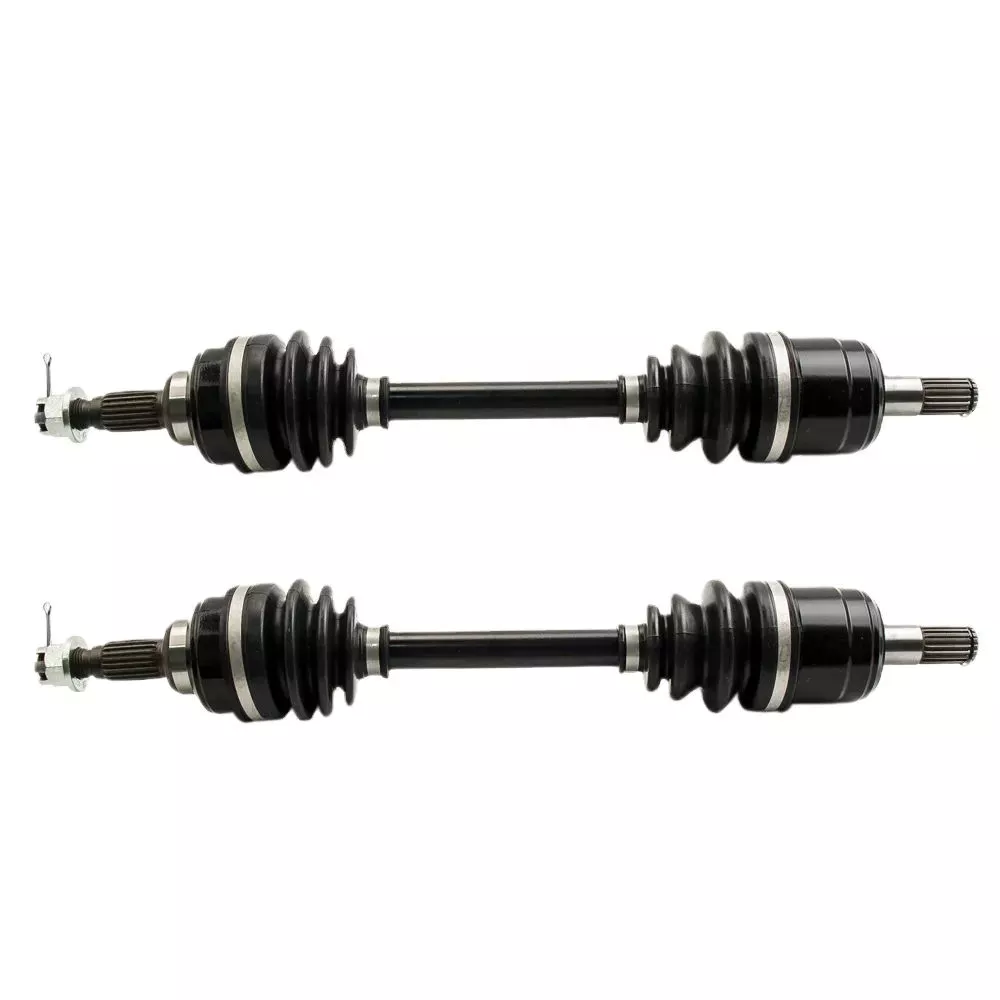
A power take-off (PTO) shaft is a mechanical component used in agricultural and industrial equipment to transfer power from a power source, such as an engine or motor, to another machine or implement. It is a driveline shaft that transmits rotational power and torque, allowing the connected equipment to perform various tasks. PTO shafts are commonly used in agricultural machinery, such as tractors, as well as in industrial equipment, including generators, pumps, and construction machinery. Here’s a detailed explanation of what a PTO shaft is and how it is used:
Structure and Components: A typical PTO shaft consists of a hollow metal tube with universal joints at each end. The hollow tube allows the shaft to rotate freely, while the universal joints accommodate angular misalignments between the power source and the driven equipment. The universal joints consist of a cross-shaped yoke with needle bearings, providing flexibility and allowing the transmission of power at varying angles. Some PTO shafts may also include a telescopic section to adjust the length for different equipment setups or to accommodate varying distances between the power source and the driven machine.
Power Transfer: The primary function of a PTO shaft is to transfer power and torque from the power source to the driven equipment. The power source, typically an engine or motor, drives the PTO shaft through a mechanical connection, such as a gearbox or a clutch. As the power source rotates, it transmits rotational force to the PTO shaft. The PTO shaft, in turn, transfers this rotational power and torque to the driven equipment, enabling it to perform its intended function. The torque and rotational speed transmitted through the PTO shaft depend on the power source’s characteristics and the gear ratio or clutch engagement.
Agricultural Applications: In agriculture, PTO shafts are commonly used in tractors to power various implements and attachments. The PTO shaft is connected to the tractor’s power take-off, a rotating drive shaft located at the rear of the tractor. By engaging the PTO clutch, the tractor’s engine power is transferred through the PTO shaft to the attached implements. Agricultural machinery, such as mowers, balers, tillers, sprayers, and grain augers, often rely on PTO shafts to receive power for their operation. The PTO shaft allows the implements to be powered directly by the tractor’s engine, eliminating the need for separate power sources and increasing the versatility and efficiency of agricultural operations.
Industrial Applications: PTO shafts also find extensive use in various industrial applications. Industrial equipment, such as generators, pumps, compressors, and industrial mixers, often incorporate PTO shafts to receive power from engines or electric motors. The PTO shaft connects the power source to the driven equipment, allowing it to operate and perform its intended function. In construction machinery, PTO shafts can be found in equipment like concrete mixers, hydraulic hammers, and post hole diggers, enabling the transfer of power from the machinery’s engine to the specific attachment or tool being used.
Safety Considerations: It is important to note that PTO shafts can pose safety risks if not handled properly. The rotating shaft can cause serious injuries if operators come into contact with it while it is in operation. To ensure safety, PTO shafts are often equipped with shielding or guards that cover the rotating shaft and universal joints, preventing accidental contact. It is crucial to maintain and inspect these safety features regularly to ensure their effectiveness. Additionally, operators should receive proper training on PTO shaft operation, including safe attachment and detachment procedures, as well as the use of personal protective equipment when working near PTO-driven machinery.
In summary, a PTO shaft is a mechanical component used in agricultural and industrial equipment to transmit power and torque from a power source to a driven machine or implement. It enables the direct power transfer from engines or motors to various equipment, increasing efficiency and versatility in agricultural and industrial operations. While PTO shafts offer significant benefits, operators must be aware of the associated safety considerations and take appropriate precautions to prevent accidents and injuries.


editor by CX 2024-04-12